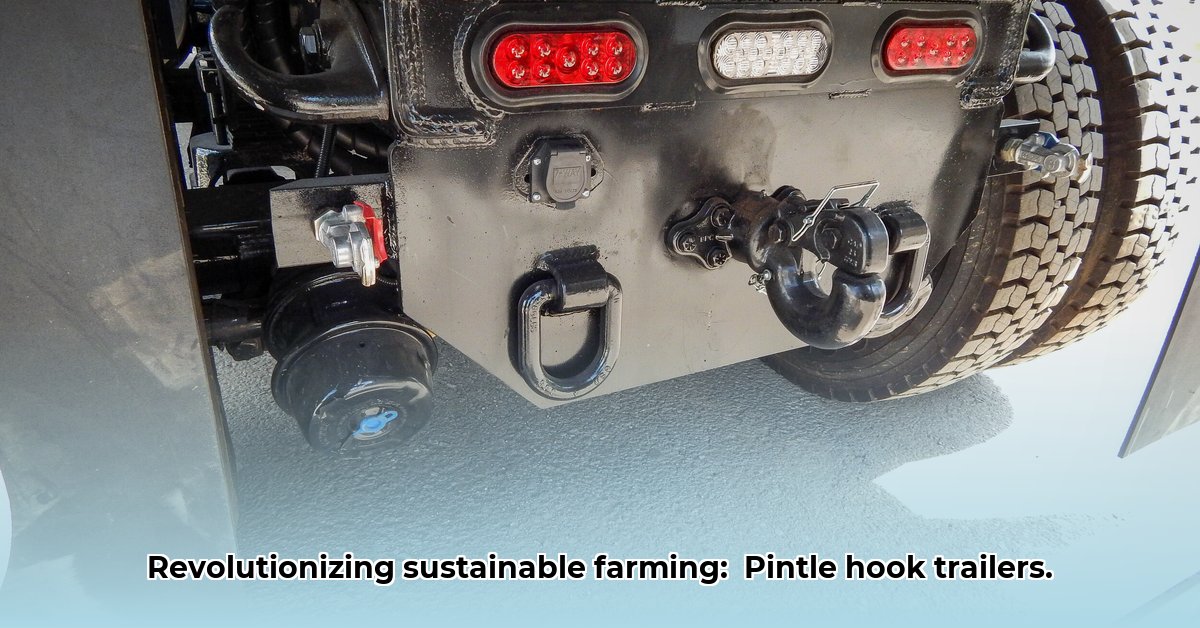
Farming demands efficiency, and sustainable practices add another layer of complexity. However, optimizing hauling methods significantly impacts both efficiency and environmental responsibility. Pintle hook tractor trailers offer a surprisingly effective solution, combining robust hauling capabilities with fuel economy and reduced emissions. This guide explores the practical applications of pintle hooks in sustainable agriculture, encompassing technical aspects, selection criteria, operational safety, and the environmental benefits. For more on compact tractor trailers, see this helpful resource.
Understanding Pintle Hook Mechanics
A pintle hook is a heavy-duty, metal hook that forms a robust connection between a tractor and a trailer. The hook (the pintle) inserts into a ring (the lunette ring) on the trailer's tongue. This simple yet effective design, enhanced by safety chains, ensures a secure and reliable connection for heavy loads. Different sizes and designs cater to varying weight capacities and trailer types. Understanding the mechanics is crucial for safe and effective operation.
Selecting the Right Pintle Hook System
Choosing the appropriate pintle hook system requires careful consideration of several factors:
Payload Capacity: The system's weight capacity must equal or exceed the combined weight of the trailer and its contents. Underestimating this critical aspect can lead to catastrophic equipment failure and potentially dangerous accidents. Always consult both the trailer's and the pintle hook's weight ratings.
Trailer Compatibility: Ensure your chosen pintle hook matches the dimensions and type of your trailer's lunette ring. Improper fit can compromise stability and safety.
Material Strength: High-quality steel is vital for durability and safety. The pintle hook should withstand significant stress and repeated use in demanding conditions. Look for certifications verifying material strength and construction quality.
Safety Features: Robust safety chains serve as essential backups. These should be inspected regularly and maintained to prevent separation during operation. A secure locking mechanism further enhances safety and prevents accidental disconnections.
Pintle Hooks and Sustainable Farming Practices
The advantages of pintle hooks extend beyond mere hauling. They directly contribute to more environmentally friendly and profitable farming:
Reduced Fuel Consumption: Higher payload capacity means fewer trips to transport the same amount of goods. This directly translates to lower fuel consumption and reduced operational costs. "Studies show that optimized hauling can reduce fuel costs by up to 15%," says Dr. Emily Carter, Agricultural Engineer at the University of California, Davis.
Lower Greenhouse Gas Emissions: Lower fuel consumption directly correlates to fewer greenhouse gas emissions. This reduces the farm's carbon footprint and contributes to global environmental sustainability efforts. "Every gallon of fuel saved is a step towards a greener future," adds Dr. Carter.
Improved Efficiency: Reliable hauling means less downtime and increased operational efficiency. Farmers can focus on core agricultural activities, rather than spending excessive time on transportation logistics.
Reduced Soil Compaction (Indirect): While not a direct impact, efficient hauling minimizes the number of passes heavy machinery makes over fields, indirectly reducing soil compaction. This contributes to improved soil health and long-term soil fertility.
Maintenance and Safety Procedures
Regular maintenance ensures safety and longevity:
Pre-Operational Inspections: Carefully inspect the entire system – hook, ring, safety chains – before each use. Check for wear, cracks, bends, or any signs of damage. Replace or repair any damaged components immediately.
Lubrication: Regular lubrication reduces friction and wear, extending component lifespan. Use a lubricant appropriate for the conditions and materials.
Tightening: Regularly check and tighten all nuts, bolts, and connections to maintain structural integrity and safe operation.
Safety Chain Verification: Ensure safety chains are correctly attached and have the appropriate slack. These are critical safety features.
Case Study: [Farm Name]
[Farm Name] in Iowa transitioned to pintle hook trailers for grain hauling. They reported a 12% reduction in fuel consumption and a corresponding decrease in greenhouse gas emissions over a six-month period. This improvement allowed them to reallocate resources to other essential farm operations.
Conclusion
Pintle hook tractor trailers offer a practical and impactful solution for sustainable farming. Their ability to enhance efficiency, reduce fuel consumption and emissions, and improve overall profitability makes them a valuable investment for environmentally conscious and economically savvy farmers. By implementing proper maintenance routines and selecting the right system for their needs, farmers can realize significant benefits contributing to a more sustainable agricultural future.